



No products in the cart.
The laundry is often the smallest room in the house, but it’s the one that fills up fastest. Baskets on the floor, brooms leaning in the corner, detergent bottles crowding the benchtop. Most of this comes down to one thing: the laundry doesn’t have enough defined storage zones for everything that lives in it.
The right laundry cabinet layout gives every item, from dirty washing to cleaning gear, its own home. This guide breaks down the laundry storage zones, cabinet types and layout examples that actually keep a laundry tidy day to day.
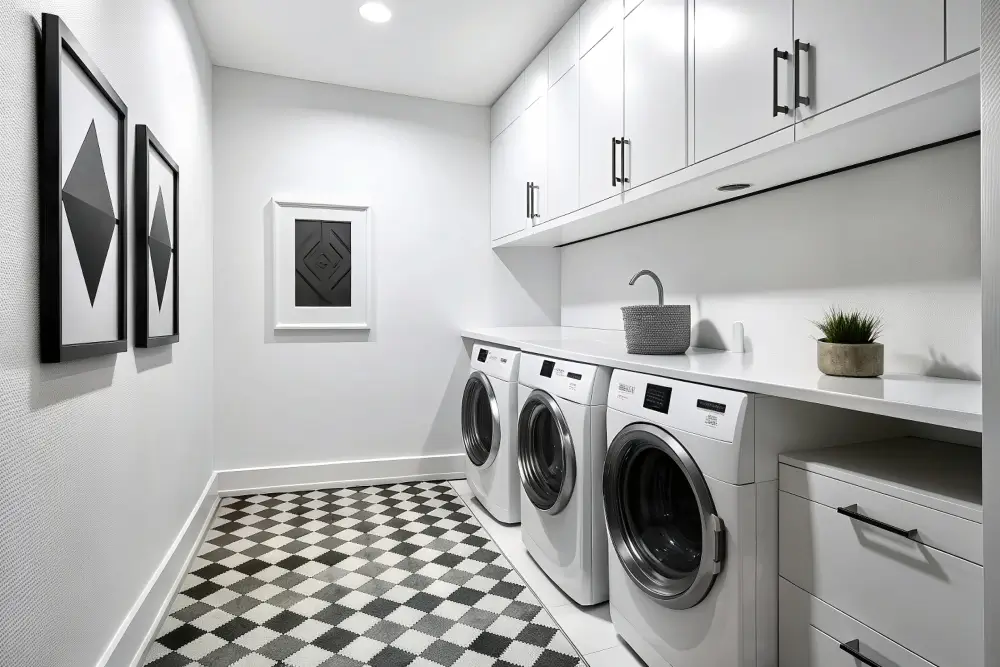
The Laundry Storage Zones That Actually Reduce Clutter
A laundry that stays tidy usually has four clear storage zones working together, not just cabinets scattered wherever they fit:
- Dry zone: Benchtop and folding space, kept clear of splashes and away from the sink.
- Wet zone: Laundry tub, utility sink, and plumbing connections, positioned close to the washing machine.
- Hamper zone: A dedicated spot for sorting dirty washing before it hits the machine.
- Vertical storage zone: Tall cabinets for brooms, mops, ironing boards and bulky items that otherwise end up on the floor.
Combining base cabinets and overhead cabinets across these zones usually gives the best mix of bench space and storage capacity. Our full range of laundry cabinets, tubs, and fittings covers everything you need for each of these zones if you’re planning a fit-out.
Hamper Storage: Give Dirty Washing a Proper Home
One of the simplest ways to reduce laundry clutter is giving dirty washing a designated place before it ever reaches the floor.
- Pull-out hamper drawers fitted into standard base cabinets (such as a 500mm or wider base unit) keep sorting bins completely out of sight.
- Stainless steel wire laundry baskets with full-extension bottom runners and optional canvas liners make transferring clothes to the machine effortless.
- A hamper cabinet close to the wet zone means less carrying of full baskets across the room.
Without a hamper zone, washing tends to pile up on the floor or benchtop, which is often the single biggest source of everyday laundry clutter.
Broom Cupboards and Overhead Cabinets: Clearing the Floor and Benchtop
Two cabinet types do most of the heavy lifting for laundry storage: tall vertical cabinets and overhead wall cabinets.
Tall 2.2m (2200mm) vertical cabinets provide high-density pantry and utility storage. Utilising vertical height keeps bulk items, spare linen, and cleaning supplies contained behind closed doors, preserving precious floor space in compact rooms.
Overhead cabinets sit above the benchtop and are typically used for:
- Detergents and cleaning chemicals, stored up and out of reach of young children.
- Spare linen and towels that don’t need daily access.
- Everyday laundry essentials that would otherwise clutter the benchtop below.
A well-planned laundry layout with a 2.2m tall utility cabinet and overhead cabinets does more than reduce clutter day to day. It also lifts the practical appeal of the room if you ever come to sell, something we cover in more detail in our guide to laundry upgrades and resale appeal.
Laundry Layout Examples for Different Spaces
The right cabinet layout depends heavily on the size and shape of the laundry itself:
| Laundry Type | Typical Layout | Best For |
| Small laundry nook | Overhead cabinets above the machine, slim hamper drawer below the bench | Apartments and compact homes |
| Straight-line laundry | One benchtop along a single wall, storage above and below, washer and dryer at either end | Most standard family laundries |
| Laundry with a tall vertical cabinet | Straight-line layout plus a 2.2m tall vertical cabinet at one end | Households with a dedicated laundry room |
| Laundry-plus-storage room | Full run of base and overhead cabinets, hamper zone, and a broom cupboard | Larger laundries doubling as a mudroom or storage space |
Frequently Asked Questions on Laundry Cabinets
How do I organise laundry cabinets to reduce clutter?
Start by defining separate zones: a dry zone for folding, a wet zone near the sink, a hamper zone for sorting dirty washing, and vertical storage for brooms and bulky items. Giving each category its own cabinet space is what stops general clutter from building up on the floor or benchtop.
What is a laundry hamper cabinet?
A laundry hamper cabinet is a base cabinet fitted with a pull-out wire basket system (such as BDW’s 97L pull-out wire basket) designed to conceal dirty washing before it goes into the machine.
Do I need a broom cupboard in my laundry?
A broom cupboard is not essential, but it solves one of the most common laundry storage problems: bulky items like mops, vacuums and ironing boards with nowhere proper to go. A 2.2m tall cabinet keeps these items upright and off the floor.
Where should overhead cabinets go in a laundry?
Overhead cabinets typically sit above the benchtop or washing machine, used to store detergents, cleaning chemicals and spare linen up and out of reach. This keeps the benchtop clear for folding and sorting, and keeps chemicals away from young children.
What is the best laundry cabinet layout for a small space?
For a small laundry, a compact layout with overhead cabinets and a slim pull-out hamper drawer usually works best, since it adds laundry storage without eating into floor space. Vertical storage, rather than a wide bank of base cabinets, tends to suit tighter laundries.
A laundry cabinet layout with clear zones for washing, hampers, cleaning gear and everyday essentials is what actually keeps daily clutter under control, not just a fresh coat of paint.
Visit our showrooms to inspect cabinet and storage options in person, or get in touch with our team to help plan your laundry layout.