



No products in the cart.
Choosing between floor standing and wall-hung vanity units comes down to more than looks. The two styles have different installation requirements, different overall trade costs, and different everyday practicality once the tapware is running and the towels are hung. If you are planning a bathroom renovation in Brisbane or anywhere else in Australia, understanding these differences before you buy can save you an unexpected trade bill later.
This guide compares floor standing and wall-hung vanity units on installation, trade requirements, storage capacity, and cleaning, so you can choose the option that best suits your bathroom and budget.
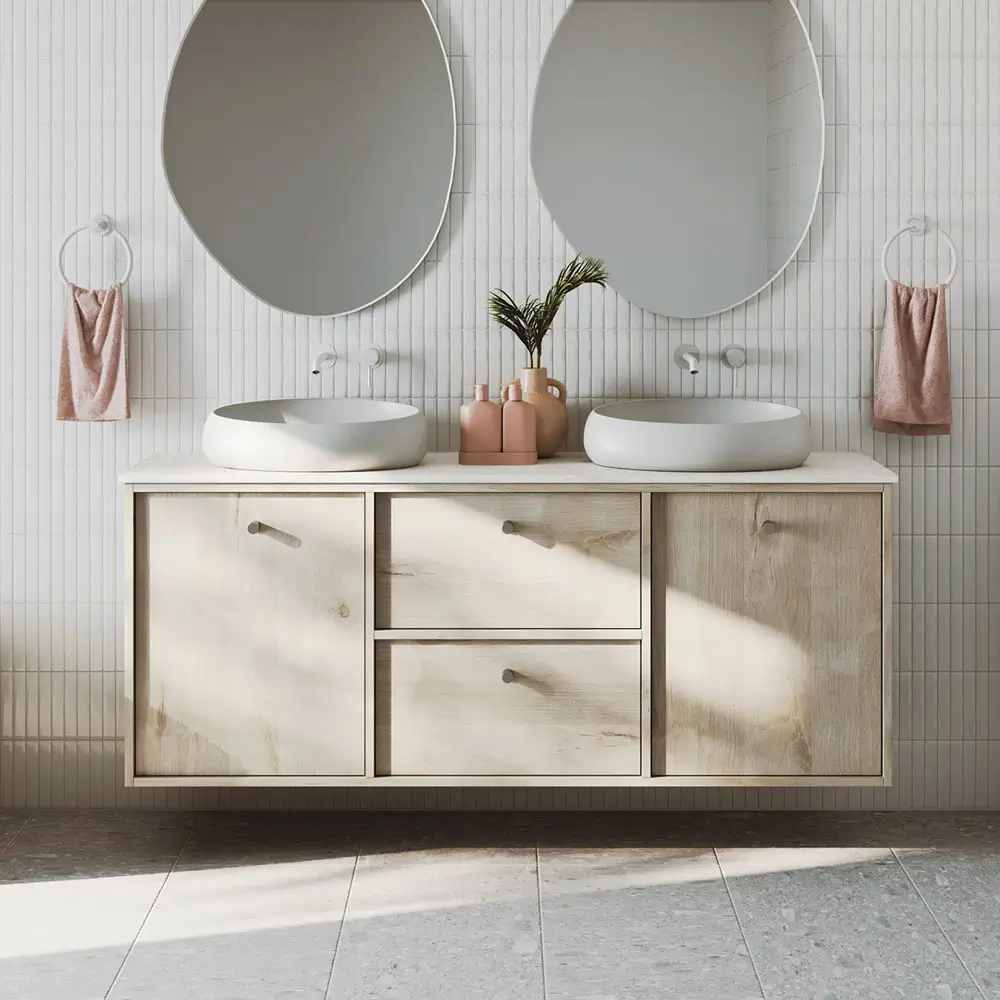
Wall-Hung vs Floor Standing Vanity Units: The Core Difference
A floor standing vanity sits directly on the floor (supported by a kickboard or base frame). A wall-hung vanity is mounted directly to the wall frame and floats above the floor, with no legs or kickboard touching the ground.
In short: floor standing vanity units are simpler to install over existing plumbing and offer extra vertical cabinet space, while a wall-hung vanity gives a modern floating look, makes cleaning underneath straightforward, and helps a compact bathroom feel larger. The right choice depends on your wall structure, budget, and storage needs.
Installation Requirements: Stud Walls, Plumber Access and Floor Clearance
Installation differences are where trade costs vary between these two styles.
What Wall-Hung Vanity Units Need
Wall-hung vanity units must be secured into solid structural timber or steel framing, never plasterboard alone. That means:
- Internal timber noggins positioned to match the vanity’s rear fixing points (Australian wall studs typically sit at 450mm or 600mm centres).
- Carpenter assistance to install support noggins if existing framing does not line up with the cabinet mounting points.
- Plumber access to re-route waste and water pipework into the wall cavity rather than coming up through the floor.
What Floor Standing Vanity Units Need
Floor standing vanity units offer greater installation flexibility:
- Floor-supported weight distribution, reducing the need for heavy wall framing modifications.
- Standard floor-mounted plumbing connections, which plumbers can often connect directly to existing waste points.
- Simple floor clearance checks, ensuring adequate space around surrounding fixtures like toilets and shower screens.
For renovations retaining existing floor plumbing, a floor standing vanity is often the faster, more straightforward replacement.
Feature Comparison: Floor Standing vs Wall-Hung Vanity Units
Trade labor costs vary based on site conditions, location, and rough-in requirements. Always consult a licensed plumber or builder for an accurate quote before finalizing your cabinet selection.
| Feature / Factor | Floor Standing Vanity | Wall-Hung Vanity |
| Wall Requirement | Standard wall fixing; floor carries weight | Structural studs or added noggins required |
| Plumbing Access | Accommodates floor or wall plumbing | Requires wall-routed waste and water points |
| Storage Capacity | Maximum vertical capacity (extra drawer/door levels) | Compact vertical footprint |
| Cleaning Practicality | Wipe down external kickboard base | Sweep and mop directly underneath floor |
| Ideal Application | Family bathrooms, high-storage spaces | Powder rooms, small ensuites, modern designs |
Which Suits Your Bathroom? Storage, Cleaning and Space
If overall bathroom storage is your main priority, a floor standing vanity is usually the most practical choice. Its extended height allows for extra drawer banks and lower cupboard storage, making it well-suited to busy family bathrooms.
If the room is compact, a wall-hung vanity can make a significant visual difference. Keeping the floor visible beneath the cabinet gives the optical illusion of a wider room, while making mopping and sweeping around the base effortless.
When making your decision, consider:
- Upfront product and trade installation costs
- Total required bathroom storage capacity
- Visual space and floor layout
Ease of ongoing cleaning and maintenance
Check your wall framing early in the planning process. Once you have chosen your cabinet style, BDW offers complete vanity packages with integrated basins, stone tops, and modular options to match your space.
Frequently Asked Questions on Vanity Units
Is a wall-hung vanity harder to install than a floor standing vanity?
Yes. Wall-hung vanity units require structural wall framing or internal noggins to hold the cabinet weight safely, along with wall-routed plumbing. Floor standing units rest on the floor, making them faster to connect to standard floor plumbing.
Do wall-hung vanity units require stud walls?
Yes, wall-hung units must be fixed to structural wall studs or horizontal noggins, not plasterboard alone. Standard Australian stud spacing is 450mm or 600mm centres.
Which vanity style offers more storage space?
Floor standing vanities generally provide more total cabinet volume because the cabinet extends all the way down to the kickboard, allowing for extra drawer tiers or lower cupboard storage compared to floating designs.
Which is easier to clean, wall-hung or floor standing vanity units?
Wall-hung vanities allow you to sweep and mop directly underneath the cabinet. Floor standing units require wiping down around the kickboard or outer base.
Whether you prefer the storage capacity of a floor standing vanity or the streamlined look of a wall-hung design, getting the installation details right from the start avoids unexpected renovation delays.
Browse our full range of wall-hung and floor standing vanity units online, or visit our showrooms in Brendale, Slacks Creek, or Arundel to inspect display models and speak with our team.